Product Information
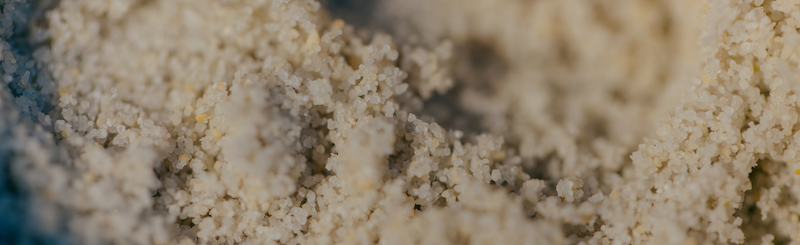
Our crushed and dried bentonite is a carefully processed intermediate product that combines the natural binding power of montmorillonite clay with the convenience of standardized particle sizing and controlled moisture content. Sourced from the premium Askanian deposit in Georgia, this material undergoes crushing and drying to produce a free-flowing, easy-to-handle product that maintains its exceptional swelling and binding properties.
Processing for Industrial Performance: Unlike raw bentonite clay, our crushed and dried product undergoes controlled processing to optimize handling and performance:
- Crushing: Reduces material to uniform 0-5mm particle size for consistent mixing and dosing
- Drying: Reduces moisture to ≤12% for stable weight, easier transport, and extended shelf life
- Screening: Removes oversized particles to ensure uniform distribution in final applications
- Quality Control: Batch testing guarantees consistent montmorillonite content and swelling properties
The Montmorillonite Advantage: The secret to bentonite’s industrial value lies in its montmorillonite content (>70% in our premium grade). This unique clay mineral features a layered structure with enormous surface area and exceptional cation exchange capacity (70-90 meq/100g). When hydrated, montmorillonite platelets swell dramatically, creating powerful binding forces through ionic attraction and mechanical interlocking.
Key Applications:
Iron Ore Pelletizing (Primary Application)
Role in Pellet Production:
- Acts as primary binder for iron ore concentrate in pelletizing drums or discs
- Creates strong “green” (unfired) pellets that survive handling and transport to induration furnaces
- Maintains pellet integrity through drying and high-temperature firing (>1200°C)
- Produces durable, high-quality pellets for blast furnace feed
How It Works: Crushed and dried bentonite (typically 0.5-1.5% by weight) is blended with iron ore concentrate and water in rotating pelletizing equipment. As the mixture tumbles, bentonite particles hydrate and swell, forming a binding matrix that glues iron ore particles together into spherical pellets. The swollen clay platelets create both physical bridges and ionic bonds between ore particles, resulting in pellets with sufficient green strength (>1 kg/pellet compression) to withstand subsequent processing.
Critical Performance Parameters:
- Swelling Index: >20 ml/2g indicates excellent binding potential
- Montmorillonite Content: >70% ensures maximum swelling and binding
- Colloidal Fraction: >90% provides fine particles for complete ore coating
- Moisture Control: <12% allows accurate dosing and predictable performance
- Particle Size: 0-5mm ensures rapid, uniform dispersion in ore concentrate
Benefits for Pellet Plants:
- Increases pelletizing drum/disc productivity by 10-20%
- Improves green pellet compressive strength to >1 kg/pellet
- Reduces fines and return material in the process
- Enhances fired pellet strength to >250 kg/pellet
- Improves iron reducibility in blast furnaces
- Reduces fuel consumption during induration
Foundry Applications
Role in Metal Casting:
- Primary binder for green sand molding systems
- Creates molds and cores that hold shape during metal pouring
- Provides “green strength” (unfired mold integrity) and thermal stability
- Enables reuse of molding sand (up to 95% recycling rate)
How It Works in Foundries: Crushed and dried bentonite (8-12% by weight) is mixed with silica sand and water to create green sand molding mixtures. The hydrated bentonite particles coat sand grains with a thin clay film. When compacted, this clay coating bonds sand grains together, creating a mold strong enough to withstand the pressure and heat of molten metal yet porous enough to allow gas escape. After casting cools, the sand-clay mixture can be reconditioned and reused.
Molding Sand Types:
- Sodium Bentonite Systems: For steel casting (high-temperature applications >1400°C)
- Calcium Bentonite Systems: For iron casting (moderate temperatures ~1200°C)
- Mixed Systems: Balanced properties for diverse casting needs
Critical Foundry Properties:
- Green Compressive Strength: >7 psi (steel), >5 psi (iron)
- Green Tensile Strength: >25 g/cm²
- Permeability: 80-120 units (allows gas escape during pouring)
- Plasticity: High for easy ramming and compaction
- Thermal Stability: Maintains binding to 1500°C
Benefits for Foundries:
- Improves dimensional accuracy of castings
- Reduces surface defects (veining, penetration, scabs, rat tails)
- Enables high sand reuse rates (cost and environmental benefits)
- More economical than synthetic binders
- Non-toxic (no hazardous fumes during metal pouring)
Civil Engineering & Construction
Typical Applications:
- Waterproofing for foundation excavations and basements
- Bentonite slurry for deep foundation drilling and diaphragm walls
- Sealing liners for ponds, lagoons, and landfills
- Well sealing and groundwater protection
- Soil stabilization and erosion control
How It Works: When mixed with water, crushed and dried bentonite swells to 12-15 times its dry volume, forming a gel-like barrier with extremely low hydraulic conductivity (<10⁻⁹ m/s). This swelling property makes bentonite an effective, self-healing sealant—if cracks develop, surrounding bentonite migrates into the void and re-swells to maintain the seal.
Civil Engineering Benefits:
- Creates reliable, long-lasting waterproof barriers
- Self-healing capability (cracks automatically seal)
- Natural, environmentally safe material
- Cost-effective compared to synthetic membranes
- Easy installation and application
Additional Industrial Uses
Drilling Fluids (Oil & Gas):
- Lubricates and cools drill bit
- Carries drill cuttings to surface
- Stabilizes borehole walls
- Forms low-permeability filter cake
Ceramics Industry:
- Plasticizer for ceramic bodies
- Improves workability and green strength
- Reduces cracking in unfired ware
Chemical Processing:
- Catalyst carrier/support
- Absorbent for oil and grease purification
- Thickener for paints, coatings, and adhesives
Benefits
- Exceptional Binding Power – Montmorillonite content >70% delivers superior swelling (12-15x volume) and cation exchange capacity (70-90 meq/100g) for maximum binding strength in pellets and molds
- Standardized Particle Size (0-5mm) – Uniform crushing ensures consistent mixing, rapid dispersion, and predictable performance in automated dosing systems
- Controlled Moisture Content (≤12%) – Low, stable moisture eliminates weight variation during storage and transport, enabling accurate formulation and reducing handling issues
- High Pelletizing Efficiency – Increases iron ore pelletizing drum productivity by 10-20% while improving green pellet strength to >1 kg/pellet and fired pellet strength to >250 kg/pellet
- Superior Foundry Performance – Delivers green compressive strength >7 psi for steel casting with optimal gas permeability (80-120 units), reducing defects and enabling 95% sand reuse
- Thermal Stability to 1500°C – Maintains binding properties through high-temperature firing and metal casting processes without decomposition or loss of strength
- Cost-Effective Solution – More economical than synthetic binders and activated bentonite powders while delivering comparable or superior performance in most applications
- Easy Handling & Storage – Free-flowing granular format prevents caking, simplifies transport, and extends shelf life to 24 months under proper storage conditions
- Versatile Multi-Industry Use – Single product serves pelletizing, foundry, civil engineering, drilling, ceramics, and chemical processing applications
- Natural & Environmentally Safe – Non-toxic material produces no hazardous fumes or byproducts; safe for workers and environmentally responsible
- Consistent Quality Assurance – Every batch tested to Georgian Enterprise Standard STP GR 22983003-001-2017 for reliable, repeatable results
- Self-Healing Properties – In waterproofing applications, bentonite automatically migrates into cracks and re-swells to maintain seal integrity over time
Specifications
Basic Properties
| Parameter | Value |
|---|---|
| Product composition | Natural sodium bentonite (montmorillonite clay) from Askan deposit |
| Physical form | Crushed and dried granules |
| Particle size | 0-5 mm |
| Moisture content | ≤ 12% |
| Color | Light beige to grey |
| Odor | Odorless |
| Bulk density | 800-1000 kg/m³ |
Chemical & Mineralogical Composition
| Parameter | Value |
|---|---|
| Montmorillonite content | ≥ 70% |
| Swelling index | ≥ 20 ml/2g |
| Cation exchange capacity (CEC) | 70-90 meq/100g |
| pH (10% suspension) | 8.5-10.5 |
| Colloidal fraction (<2μm) | ≥ 90% |
| Sodium oxide (Na₂O) | ≥ 2.0% |
| Calcium oxide (CaO) | ≤ 3.0% |
| Silica (SiO₂) | 55-65% |
| Alumina (Al₂O₃) | 18-25% |
Performance Characteristics by Application
Iron Ore Pelletizing
| Parameter | Specification | Importance |
|---|---|---|
| Swelling index | >20 ml/2g | Binding strength indicator |
| Montmorillonite | >70% | Green & fired pellet strength |
| Moisture | <10% preferred | Accurate dosing |
| Particle size | 0-5mm uniform | Rapid dispersion |
| Green ball strength | >1 kg/pellet | Handling before firing |
| Fired pellet strength | >250 kg/pellet | Blast furnace durability |
Foundry Molding Sand
| Parameter | Steel Casting | Iron Casting |
|---|---|---|
| Bentonite addition | 8-12% | 6-10% |
| Green compressive strength | >7 psi | >5 psi |
| Green tensile strength | >25 g/cm² | >20 g/cm² |
| Permeability | 80-120 units | 100-150 units |
| Moisture | 3-5% | 3-4% |
| Working temperature | Up to 1500°C | Up to 1300°C |
Civil Engineering
| Parameter | Value |
|---|---|
| Swelling capacity | 12-15x dry volume |
| Hydraulic conductivity | <10⁻⁹ m/s |
| Typical application rate | 5-10 kg/m² (liners) |
| Slurry density (drilling) | 1.03-1.10 g/cm³ |
Quality Standards Compliance
- Georgian Enterprise Standard: STP GR 22983003-001-2017
- ISO Standards: ISO 9001:2015 Quality Management System
- Customer-Specific Requirements: Custom specifications available upon request
Recommended Dosage Rates
Iron Ore Pelletizing
- Standard grade ore: 0.5-1.0% by weight
- Fine ore concentrate: 1.0-1.5% by weight
- High-grade concentrate: 0.8-1.2% by weight
Optimize dosage based on ore characteristics, moisture, and pellet quality requirements
Foundry Green Sand
- Steel casting (sodium bentonite): 8-12% by weight
- Iron/brass casting (calcium bentonite): 6-10% by weight
- Aluminum casting: 6-8% by weight
Adjust based on sand type, grain size, and desired mold properties
Civil Engineering
- Waterproofing slurry: 4-8% suspension in water
- Sealing mats/blankets: 5-10 kg/m² coverage
- Drilling fluids: 3-6% by weight of water
General Industrial
- Ceramics (plasticizer): 2-5% by weight of ceramic body
- Drilling mud: 4-8% by weight of water
- Soil stabilization: 2-4% by weight of soil
Packaging Options
Standard Commercial Packaging:
- Polypropylene bags: 25 kg, 50 kg
- Big-Bag (FIBC) containers: 500 kg, 1,000 kg
- Custom packaging available upon request
Bulk Delivery (Large Volume Customers):
- Bulk truck transport (loose material)
- Rail car delivery
- Container shipment for export
Documentation
Technical Documentation Available:
- ✓ Technical Data Sheet (TDS)
- ✓ Safety Data Sheet (SDS/MSDS)
- ✓ Certificate of Analysis (COA)
- ✓ Quality Certificates
Please contact our sales team to request documentation or create an account for full access to technical resources.
Need Technical Support?
Our team of experts is ready to help you find the right solution for your application.
Contact Us